
Nintendo’s life simulator fails to even come close to capturing life’s full diversity
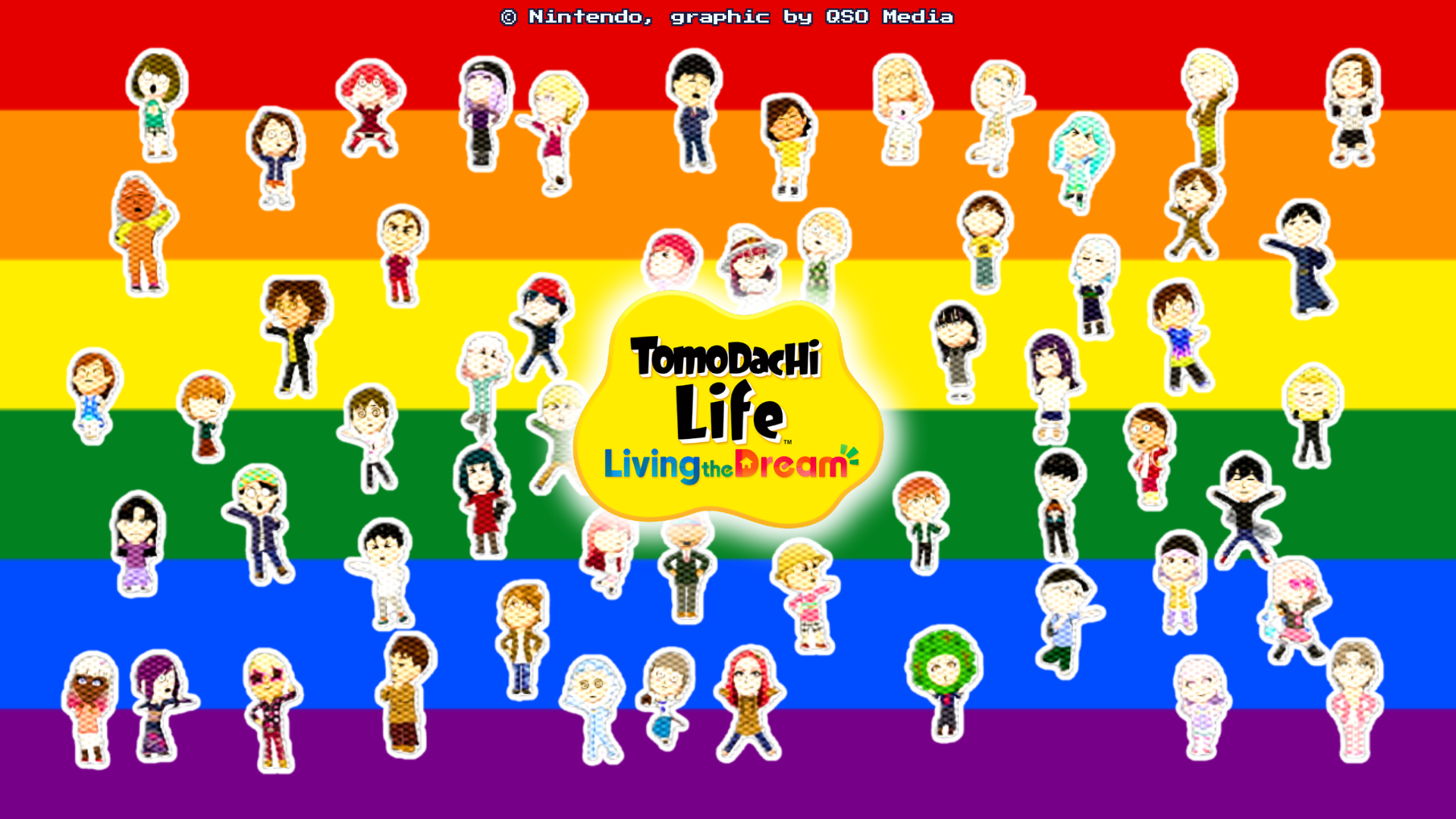
It’s been a few months since the latest installment of Nintendo’s quirky life simulator series, Tomodachi Life, dropped. Since then, the internet has been flooded with incredible hand-drawn creations, crackship babies, and many tiny Satoru Gojos eating entire packs of cigarettes. As it turns out, life can be a dream when a beloved series is rebooted. Who could’ve thought?
Unlike the franchise’s earlier entries, Tomodachi Collection and Tomodachi Life, you can finally be openly queer in Tomodachi Life: Living The Dream. Your Miis can be gay, lesbian, bisexual, pansexual, or aromantic. Truly, Mario was not screwing around when he said he would recognise same-sex marriage even if the National Diet doesn’t. Thank god for that; my Aki Hayakawa and Angel Devil Miis can be wed in the eyes of god – or, in this case, me. And boy, did they. Quickly, too.
Making queer Miis is a breeze, but it could’ve been more friction-free

You’d be forgiven if you missed the advent of queer Miis in Tomodachi Life though, or didn’t know how to make your Miis queer in the first place. That’s because it’s actually a relatively discreet menu in the Mii maker, hidden away behind an additional button push. This is a step I regularly forget to do, since it doesn’t come up automatically like every other menu in the Mii Maker does.
That’s a problem. You know why it’s a problem?

Well, if you don’t pull up the menu, then your Mii will automatically be straight. Female Miis default to being exclusively attracted to Male Miis, and Male Miis default to being exclusively attracted to Female Miis. Hello, heteronormativity! Are you going to be the next challenger in Super Smash Bros, too?
The Mii Maker’s somewhat subtle sexuality settings also automatically opts your Miis into the romantic attraction system altogether. You’ll have to go out of your way to open the menu and toggle it off yourself, just the same as if you wanted to make your Mii gay, lesbian, or bisexual.

Now, don’t get me wrong: unlike in real life, it’s as easy to switch sides as a push of a couple of buttons. However, that doesn’t make it okay that anything is treated as a default – or that some options are tucked away in another screen that some people will simply never see. It wouldn’t have been difficult at all to treat this menu like any other option in the character builder, instead of treating it as an optional setting that was kicked off to the side.
Perhaps even more strangely, this menu isn’t treated as optional for every Mii. In fact, I didn’t even realise that this was the case at all at first, considering the first Mii I made was nonbinary.

When you make a nonbinary Mii, Tomodachi Life: Living The Dream makes mercifully few assumptions about you. You can toggle any attraction settings, pick your default outfits, and select your pronouns upfront, without anything being tucked away in a secondary menu. I naively assumed that would be the case for everyone, until I proceeded to make a male Mii to accompany them on their island adventures, and inadvertently made him straight. Perish the thought.
Don’t forget to assign your Mii’s gender

Thankfully, sexuality aside, the gender system itself is actually quite good. Our tiny tomodachis aren’t restricted to a nightmarish gender binary anymore. You can make nonbinary Miis, as well as switch up your Miis genders at any time (something that’s paramount for the gamer who’s yet to discover some things about themselves, I’m sure).
Your Mii’s gender isn’t constrained to a specific model, a set of pronouns, or any kind of behaviour. You just pick a base to create your Mii from first, build the hell out of them, and then assign their gender, pronouns, and select if they have any outfit preferences.

The outfit preferences don’t apply to your Miis day-to-day clothing preferences, but instead to event-related outfits. Basically, it decides what they wear when they get married, or appear on the hourly news, or any other cutscenes where they aren’t wearing outfits you’ve given them. It boils down to the option of wearing suits and trousers, skirts and dresses, or a combination of the two at random.
When it comes to clothes, hair, and other features outside of cutscenes, it’s a mercifully gender neutral free-for-all. Anyone can wear anything in this Mii-based utopia. Hmm, they should make a portmanteau of– wait, wrong game.

It’s not perfect – there’s no real need to add the option of picking a specific base when building a Mii, especially considering that a blank slate would be far more helpful – but it’s enjoyably flexible, and overall pretty well thought out. It does eventually hit another snag, however, when it comes to pronouns.
Your Miis can either use he/him, she/her, or they/them. It’s a solid start, but rather incomplete. Sadly, you aren’t able to give them mixed pronouns, like she/they, or the option of using any pronouns. There also isn’t an option for custom pronouns. It seems like a somewhat missed opportunity, considering you can customise almost anything else. I mean, I’ve flooded my island with custom Marlboro Reds. Can’t I make someone who uses it/its pronouns, too?
You can, however, change your Miis’ pronouns at any time. So, if you want to use mixed pronouns, your best bet is probably to hop back into Mii Maker and switch it up sometimes. It’s a little arduous, though.
A new bombshell has entered Tomodachi island

Meanwhile, relationships in Tomodachi Life: Living The Dream get a little sticky. Not like that – that isn’t the reason why Nintendo doesn’t want us sharing screenshots directly to social media. Mii dating is fun, messy, and in contradiction to the quirky life simulator’s title, sometimes incredibly damn unfriendly. If you’re lucky, or unlucky, your Miis might even end up in a big and totally bizarre love triangle.
Unfortunately, and unlike in real life, your bizarre love triangles have to end badly. That’s because there’s no such thing as non-monogamy among Miis.

But what if my dream is to have about ten boyfriends?! What if I want Loid Forger to get passed around like a well-dressed joint? Tough shit, says Nintendo. Your Miis can’t have multiple girlfriends, boyfriends, or any other kind of partner. No polyamory (or cheating, for that matter) is allowed in Tomodachi Life: Living The Dream. Your Miis have to leave their partners altogether or homewreck instead. It’s still enjoyably chaotic, but it seems like a missed opportunity anyway.
Mii marriage – and in turn, Mii divorce – hinges heavily on jealousy. It makes for a great game mechanic, for sure. However, it does mean that my throuple and triad-shaped OT3s have to all but go out of the window on my very own so-called Magic Banana Island.

I will say that I found this out in the funniest, weirdest, and perhaps most cringey way possible: through my tiny little Mii Phoenix Wright falling deeply in love with Nagito Komaeda, breaking the hearts of pining Miles Edgeworth and yearning Hajime Hinata into little pixelated shards in front of my very eyes. They couldn’t just work it out among themselves as a part of some kind of ethical non-monogamy situation. No, instead I had to deal with several deeply dysregulated fictional boys’ feelings all at once.
Nagito and Phoenix are married now, despite my best efforts, and I hate every moment of it. In case you were wondering. I don’t think that god should be used as an excuse to get in the way of any queer marriage, but as this island’s resident omniscient being, I’m starting to have second thoughts on the matter.
No Mii sex before marriage

With marriage comes babies. Literally. No, don’t check your calendar – it isn’t magically 1953. To be able to have a baby in Tomodachi Life: Living The Dream, you have to be married to a partner.
You can be a single parent if you get divorced or if you build a Mii offspring from scratch – which is excellent news for Trucy Wright, as it means she isn’t forced to be related to Jabberwock Island’s best-known terrorist sexyman – but you can’t raise a baby. Except when you make your related Miis from scratch, they won’t automatically know they’re related to each other, and you won’t be able to watch a wee montage of their baby growing up.
The requirement of marriage before babies seems like a curious stipulation; one which perhaps raises questions about the role of the church in the Miiverse’s state. Considering I’m my island’s god, why would I want to get in the way of any kind of family structure? I try not to ponder it too deeply, but it certainly isn’t my dream.
The sound of tiny Tomodachi feet is bizarrely gendered

Thankfully, there’s no cisnormative or homophobic nonsense when it comes to Mii pregnancy. In fact, I’m not even sure if Miis can get pregnant at all. Baby Miis just mysteriously appear in your married Miis’ shared homes eventually.
We’re totally – and mercifully – spared any outrageous guardrails or unwanted details around conception. I appreciate that fact not only because of its inclusivity, but also because it stops me from having to know too much about Mii reproduction and the gestational cycle. There are some things we simply can’t go back to unknowing.

There’s a real spoke in the stork’s baby-delivering duties, though: newborn Miis cannot be nonbinary. Instead, you – as your island’s own omnipotent being – have to decide if the baby is a girl or a boy. There is a third option, where you say you don’t mind, but unfortunately, all that does is randomise whether they become a boy or a girl. You don’t get to choose their pronouns, either. Why can’t they all just be Assigned Tomodachi At Birth?
Once you’re past the whole baby-rearing montage, you can customise your now non-baby-sized Mii. That includes being able to switch up your Mii’s gender and pronouns. So, thankfully, you aren’t bound to a binary baby forever – but it does leave a rather bad taste in the mouth nonetheless. It might sound radical, but I just don’t think that Mii infants should have to worry about making a deal with god to be gendered correctly once they reach a certain age.
Tomodachi Life: Living the Dream’s bizarrely binary babies issue unfortunately stretches a little further than this. Your baby will default to being straight, too. Again, you can do something about it if you so wish in the Mii maker afterwards. Talk about heteronormativity again, though.
The Mii maker is full of misses and relies too much on custom items

Although it’s a substantial improvement on the Nintendo Switch’s built-in Mii maker – and the franchise’s earlier attempts at customisation – it’s still woefully limited in a lot of ways. The skin colour options are limited to a pre-set palette, with other facial features and makeup options being similarly restricted.
The colour systems for custom items are much more complex, including a full colour wheel and mixing tools. It would’ve been far, far better if the character creator had been handled the same, allowing for greater variety and customisation for each Mii.
As it stands, some skin tones look ashy, while others are oversaturated, leaving much to be desired. Your options when it comes to skin details like vitiligo, scars, or birthmarks are limited when it comes to presets, but a little better if you’re happy to customise your Miis using facepaint.

Another significant limitation when it comes to the character builder becomes apparent when you try to make any Miis that aren’t fully ambulatory. Every Mii walks – there aren’t any options for wheelchairs or amputees. There aren’t any options for mobility aids, either.
Similarly, bar any cleverness with custom items – like this absolutely amazing custom wheelchair dress – you can’t automatically add items like hearing aids or insulin patches in the same way you can add glasses in the Mii builder itself. That means that anything you add to them needs to be added later.
And, you don’t even unlock the ability to make custom items at all until you’ve sunk a few hours into the game. So, you wouldn’t be able to give your Mii a wheelchair right off the bat, and they wouldn’t be able to change their clothes unless you make more variations on the outfit yourself.

You also can’t give your Miis head coverings straight away, and you have to wait for them to become available in the shop. Considering that happens randomly, you might be waiting a really long time to unlock one. I’ve been playing the game daily since shortly after launch, and the options I’ve seen in the shop throughout that time are seriously limited.
More specifically, there aren’t any hijabs in the game at all. None. Zero. When you can so easily pick hairstyles with hairbands or other accessories, and buy all manner of things from the shop, it seems like a pretty serious omission to not include them at all. You can add hijabs using mods, but simple diversity and inclusion shouldn’t ever be left to the community. Plus, you can only use mods if you’ve jailbroken your Switch – which goes against Nintendo policy.
The body type sliders are lacklustre, too. Thin Miis can be very thin, but fat Miis can really only be so fat, and certain outfits effectively override their body sizes. Height works quite well, though, with the shortest Miis being rather distinct from the tallest.
It’s telling whose lives get represented fully

Overall, even though Tomodachi Life: Living The Dream is an improvement on earlier games, it’s still full of problems. Although yes, it is just a game – a fun one, at that – it is specifically a life simulator. You can’t really simulate life if you can’t represent its variation in full, as someone’s life is always left out – and so it isn’t really captured at all.
No matter how simplistic the Mii art style is, a lot more detail could have been included in this installment of Tomodachi Life. There isn’t really any excuse for some of the gaps and issues with the release – especially given how much time passed between the entries in the franchise.
But, hey, at least Nintendo made sure you could put cigarettes in there. Right? Right??
How to make queer Miis in Tomodachi Life: Living The Dream

For all my griping, it is actually quite easy to make LGBTQA+ Miis in Tomodachi Life: Living The Dream. The steps are slightly different for each type, so I’ll go through them all individually.
How to make nonbinary Miis

Perhaps obviously, making a Mii who is a trans woman or trans man is much the same as making a Mii who is a cis woman or cis man. But if you want to make a nonbinary Mii specifically, then you need to select the right option.
You need to make your Mii like you usually would. If this is your first time playing, then a wizard (no, not a real one) will guide you through how to make one. Or, if you already have an established island, then you can make a new Mii by pressing X and selecting “Add a Mii” by pressing A. Next up, you just need to build them by choosing their appearance.

When you’ve finished building them, deciding on their body type, and naming them in the Mii Maker, you’ll see a menu with three options: Male, Female, and Non-binary. Scroll down to select Non-binary and press A, then press plus (+) or select Okay.
Next, you’ll give your Mii a set of pronouns. You can choose from He/Him, She/Her, or They/Them. After you’ve picked whichever one you want, you can toggle on their dating preferences. You can pick one, multiple, or none at all. Then, you pick whether they have any outfit preferences for special events like work or marriages. Again, you can pick one or both.

Everything else after that is much the same as any other Mii. You just need to set their age and birthday (if you want to) and choose their personality before sending them off into the world.
How to make gay, lesbian, bisexual, or pansexual Miis

Just like when you assigned your Mii’s gender, selecting your Mii’s sexuality comes after you’ve mostly built them in the Mii Maker.
Unless you make a nonbinary Mii, you need to open up the Dating Preferences menu yourself from the gender menu. When you have this menu open, hit the X button to bring up their dating preferences. You can pick any combination of Male, Female, and Non-binary.
Alternatively, you can alter it at the end, before sending your Mii off into their tropical paradise. When you see the “Does everything look good?” screen, go and select Dating Preferences and alter it from there.
How to make aromantic Miis

Just like you would if you were making a gay, lesbian, bi, or pan Mii, you can make aromantic Miis by opening up the dating preferences menu. This time though, you need to toggle off all preferences altogether.
You can toggle off your Mii’s dating preferences by selecting where it says Male, Female, or Nonbinary until the tick disappears. You’ll probably only need to untick one box for this to work.
If you’re making a nonbinary Mii, then you don’t have to select any preferences to toggle them off, as they won’t be selected by default. You just need to select Okay or press the plus (+) button on your controller.
How to choose your Mii’s pronouns and outfit preferences

If you made a non-binary Mii, then you will have already picked their pronouns. But, if you made a male or female Mii, then you’re going to need to alter their pronouns manually. That’s because the life sim has defaults associated with each gender. (Yes, yes, I know.)
Firstly, build your Mii the same as you usually would. Then, when you see the “Does everything look good?” menu, scroll down to the relevant box and select it by pressing A. You can then follow the on-screen menu to customise your Mii to get them a little truer to themselves.
How to change a pre-existing Mii’s gender, sexuality, outfit preferences, and pronouns

Well, if we’re Living The Dream, then it wouldn’t exactly make sense for Miis to be stuck one way forever. Changing your Mii’s gender is easy, even once you’ve already made them.
Find the Mii you wish to trans and select them, then press Y to bring up the clipboard menu. Next, scroll down to Edit Mii and select it. This brings up their character profile.
It’s all self-explanatory from there. If you want to change their pronouns, scroll down to Pronouns, press A, and toggle on whichever set you want them to use. On a similar note, you can change their gender by selecting that box, and their outfit or dating preferences using the same steps.
Which platforms are Tomodachi Life: Living The Dream on, and how much does it cost?

You can get Tomodachi Life: Living The Dream on the Nintendo Switch. You can also play it on the Nintendo Switch 2, courtesy of the console’s backwards compatibility, but there isn’t a specific Switch 2 upgrade for it.
It costs about £50 from the Nintendo eShop, although you can grab it for a little less if you shop wisely. That means it usually also goes for around $60 USD, or €60.
Depending on where you are in the world, you can also choose whether to grab a digital-only copy or a physical edition. Since there isn’t a Switch 2 Edition, it isn’t available as a Key Card.
Is Tomodachi Life multiplayer?

Not really, no. There are some very limited Local Play options that allow you to share some of your creations with other players nearby, but that’s about where it ends. I highly recommend sitting side-by-side with someone while you play it, though.
Toni Oisin H.C. is the Head of Audio at QSO Media. Read more of his writing here.
The Trans Legal Clinic offers free and accessible legal support to UK-based trans folks. They run the Trans Legal Fund, which you can support here.
Enjoy QSO Media’s content? Support alternative LGBTQIA+ journalism by buying us a Ko-Fi.


Leave a Reply